
Searching for Greener Pastures: Numbers 32:1-6 (1-42)

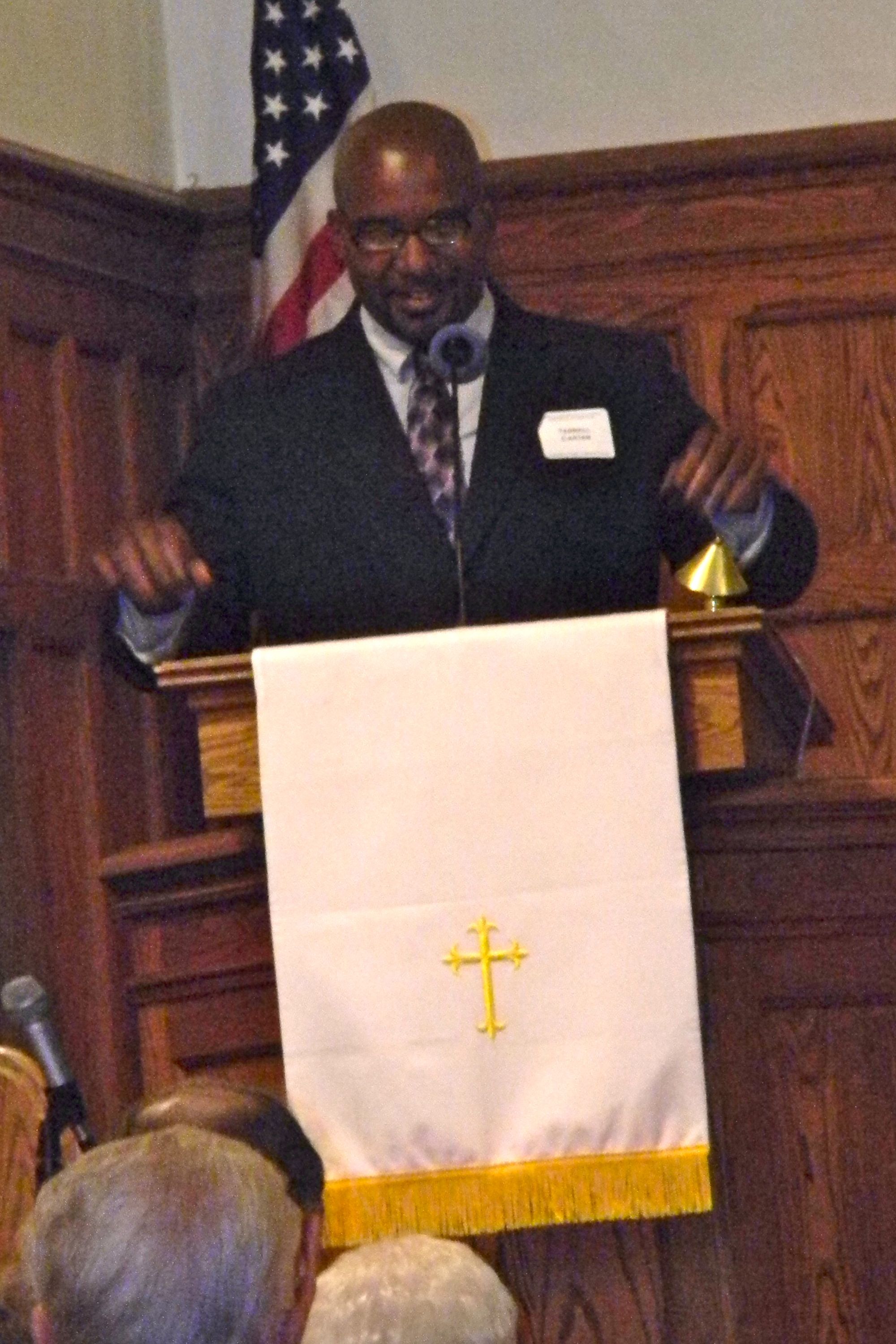
Centennial - 73Preached by Terrell Carter on June 16, 2013

All of us have probably heard the old proverb “The grass is always greener on the other side of the fence.”  But, did you know that it has been scientifically verified that the grass is greener on the other side of the fence?  No, seriously.  It has been verified.  In 1983, James Pomerantz, currently professor of psychology at Rice University in Texas, wrote a scientific article titled “‘The Grass is always Greener’: An Ecological Analysis of an Old Aphorism”.  In the article, through various means, he shows that due to verifiable optical and perceptual laws, grass that is seen from a distance does look greener than grass that is close and perpendicular to the area of ground near someone or something.  That makes me sound pretty smart doesn’t it?

No one knows when this proverb “The grass is always greener…” began to be used in the world, but pithy sayings like this have been around for a while.  Erasmus of Rotterdam, a catholic priest and theologian, is quoted as saying, “Fertilior seges est alieno semper in arvo,” meaning “The corn in another man’s ground seems ever more fertile and plentiful then does our own.”

The idea behind sayings like this is that people generally are not content with what they already have.  People do not feel that what they already have in their hands or in their possession is as good as what they could have or what someone else already has.  It’s essentially an acknowledgment of the influence of the green eyed monster, envy.

Have any of you felt the sting of envy before?  We can be truthful about this.  Have you ever looked at what someone else had and thought, “God, why didn’t you do that for me?”  Or, “God, they didn’t deserve that good thing to happen to them, that should be me with that opportunity, or person, or possession.”  Or, “Man, if I just had that thing that happened to them happen to me, I would be so much better off than I am now.”

This phenomenon of not being happy with what you have is not new.  It is as old as the day is long.  It was the root problem that led to the death of Abel at the hand of his brother Cain.  It has been at the root of multiple wars and acts of devastation that have occurred throughout the centuries.

This type of dissatisfaction brings with it several problems and issues for those who fall prey to it.  The main one being that we can miss out on the best that God has for us because we are looking somewhere else.  This is at the root of what happens in Numbers 32, which is printed in our bulletins today.

I can imagine that the Book of Numbers is probably not high on anyone’s regular list of books to read from the Bible, so please allow me to explain some of the events that have occurred leading up to this passage.

After many years of wondering in the wilderness, God’s children were finally headed to the Promised Land, Canaan.  Since leaving Egypt so many years before by God’s powerful hand, God’s children they had been walking in circles for several years.  Since leaving Egypt, they had lived on many plains and mountains, never having a permanent place to call home.  Since leaving Egypt, they saw one generation born and another generation die off.

Why did this occur?  Because the people that God led out of Egypt, through the Red Sea, and through various other miracles, these people did not trust God when God told them that they could enter the Promised Land, Canaan, and overtake it.

In Numbers 13, we are told that God instructed Moses to select one leader from each of the 12 tribes, have them each enter Canaan, and spy on the land so that they could learn everything they could about it.  After spying on the land for 40 days, these men were to come back and give an assessment of what they found so Moses and other leaders could come up with a strategy to overtake the land.

These 12 men do as they were asked and they enter the land.  40 days later they come back and give their reports.  The land is better than they could have imagined.  Everything from the lush hillsides to the cool streams.  The land flowed with milk and honey.  What they saw was almost like something from a dream.  But, the men pause because in this dream land, the rivers and mountains are not the only things that are large.

According to 10 of the spies, the cities in the land are large and well-fortified.  And the people that inhabit the land of Canaan are huge.  Not big or large, but huge.  They describe themselves as grasshoppers next to the men of the land.  They were afraid and did not want to attempt to enter the land because they believed they would get smoked by the competition.

Can we pause for a moment and look at the situation.  These men have finally seen what it is that God had been promising them for so long.  They are face-to-face with the answers to their prayers.  And how do they respond?  With fear and trepidation.

How do you think you would respond if you were in their positions?  I admit that it’s always easier to be a Monday morning quarterback and say what you would have done or wouldn’t have done in any given situation, but it can be totally different when you actually find yourself in that situation.

But, it just so happens that two of the spies disagree with the overall assessment of the situation by their 10 fellow spies.  Caleb, instead of being fearful of what’s in the Promised Land, is ready to go and get what they have been waiting for.  The ESV quotes him as saying, “”Let us go up at once and occupy it, for we are well able to overcome it.”  The CEV quotes him as saying, “Let’s go and take the land. I know we can do it!”  It doesn’t seem like there’s any hesitation from him.  He’s locked and cocked and ready to go.  Right now!

Caleb’s pep rally speech didn’t have its intended outcome.  Instead of the people being encouraged, they were still locked in fear.  So much so that, in a panic, they disregarded God completely.

Numbers 14 says that the people said, “We wish we had died in Egypt or somewhere out here in the desert!  Is the LORD leading us into Canaan, just to have us killed and our women and children captured? We’d be better off in Egypt.”  Then they said to one another, “Let’s choose our own leader and go back.”  Moses and Aaron bowed down to pray in front of the crowd.  Joshua and Caleb tore their clothes in sorrow and said: We saw the land ourselves, and it’s very good.  If we obey the LORD, he will surely give us that land rich with milk and honey.  So don’t rebel. We have no reason to be afraid of the people who live there.  The LORD is on our side, and they won’t stand a chance against us!  The crowd threatened to stone Moses and Aaron to death.  But just then, the LORD appeared in a cloud at the sacred tent.  The LORD said to Moses, “I have done great things for these people, and they still reject me by refusing to believe in my power.  So they will no longer be my people. I will destroy them, but I will make you the ancestor of a nation even stronger than theirs.”

Wow!  God turned away from an entire generation, not because God didn’t love them, but because they turned their back on God after all that had been done on their behalf.  A generation of people wandered and died in the wilderness because they failed to take God at God’s word.

And so, here we are.  God’s children are at the same physical and spiritual location one full generation later.  And they have the same choice to make as the previous generation did:  Would they follow God’s direction or choose their own fate.

At this point in their story, they were right outside the land that God previously tried to give to their relatives.  The land that God predicted would flow with milk and honey.  They could see it, and I imagine their mouths watered in anticipation.  They were less than a few hundred yards from entering the place that they have been traveling all this way to see.

Not only were they about to finally enter the Promised Land, they were doing it shortly after having defeated some of their fiercest enemies in battle.  The Israelites had just completed a massive campaign against the Midianites where Israel decimated them, killing all the men and taking their women and jewelry captive.  But, even though they are riding a military high and can see the Promised Land, all is not well with them.

While everyone is stopped and resting after their victory, and preparing to go into Canaan, members of two tribes noticed that the land that they conquered was prime real estate.  They saw that, among other things, it was ideal for raising cattle.  Representatives from these two tribes decide to go to Moses and some of their leaders and say that they didn’t want to live in the Promised Land.  Instead, they wanted to live in this fertile, luscious land.

Let’s pause again and think about that.  Can we really blame them for this decision?  Can we blame them for their desire to stop right where they were?  A bird in the hand beats two in the bush doesn’t it?  Why keep waiting for some pie in the sky promise when this land is as good as any we’ve seen?  They could have simply been tired of the walking and fighting and just wanted to be done with it all.

Let me be truthful.  I don’t necessarily see anything wrong with them seeing the land and thinking that it was plush land to raise their livestock.  The problem occurs when they either forget or haphazardly take their eyes off the prize that was waiting before them: The Promised Land.  This time, the grass is greener on this side of the fence instead of the other side.

They thought about how they could be immediately gratified.  They did not think about what God had promised them if they remained faithful and moved forward.

They took their eyes off the Promised Land.  They opted for what was immediate and convenient.

Charles Mackintosh said, “It was a mistake.  A failure.  A stopping short of the divine mark.  They were governed, in their conduct by worldly and selfish considerations–by the sight of their eyes—by carnal motives.  Had they simply been looking to God, the question of settling down short of the (Promised Land) would never have been raised at all.”  Their sin was looking at the grass and not the one who provided the grass.

How should we expect God and Moses, the Israelite leader, to respond to this request?  Moses did not respond positively.  He asks them a blunt set of questions.  “What is your problem?  Why are you being selfish?  Are you for real?  You want to stay here and enjoy life while your brothers and sisters plan on taking on all comers in order to enter the land God had promise them.  The ESV says, “You mean you’d stay here while the rest of the Israelites go into battle?”  CEV says, “Are your brothers to go to the war, while you take your rest here?”

In no uncertain terms, Moses puts this whole incident into context.  He reminds them that this is the same mistake that the first generation made.  “You are making the same mistake that your forefathers made.  You are taking their place.  The previous generation failed to trust God and you are doing the same thing.  And, if you act like them, you will be punished like they were.”

Members of the two tribes then begin to barter with God and Moses.  “No, we want to do what’s right in God’s eyesight.  Just let us keep our livestock over here and build places for them to rest.  When that gets done, we will go with our brothers to enter the Promised Land and fight whoever it is that we must fight.  Just give us a chance to get ourselves set up over here, and then we will go over there.  We will fight alongside our brothers for as long as it takes the land to be conquered.  We will not stop or return home until the land is conquered and our brothers are settled into their own homes.  We’ll make the deal even sweeter God.  We won’t even ask for any land within Canaan.  Instead, we’ll just be happy with the land that we are in right now.  Sound good?”

About this scheme, Mackintosh said, “Beware of falling short of your proper position—your proper portion—of being content with the things which belong to this world.”

Moses essentially issues them an ultimatum in response to their plan.  He tells them that if they keep their word, they can have the land they requested.  If they don’t keep their word, then they will have to take what’s given to them in Canaan.

Eventually everyone keeps their word.  They enter the land as a unified front and take possession of it, just as God had promised.  They eventually defeat new enemies and divide the land.

But the story doesn’t end there.  We all realize that when we are unwilling to cooperate with God’s plan, our plans never go smoothly.  There were multiple immediate consequences that arose for the two tribes because they failed to do things God’s way.

First, when they went to war with their brothers, their families were left behind and unprotected in a separate area.  When they went to war with their brothers, their property was left unprotected in a separate area.  When they went to war, all that they held most precious in life was left in strategic danger.

But, even worse than that was the fact that they point blank told God, “We don’t want what you have planned for us.  We know what’s best for us.  We can take care of ourselves.”  God’s heart was broken.  Mackintosh asked, “Would or could a really true heart—a heart that thought and felt and judged with God—have entertained the idea of selecting a portion other than that which God had allotted and bestowed?  Impossible.”

Thomas Constable, professor at DTS, points out several other things about this whole situation.  “Though these tribes did fulfill their military obligation, their plan was not a good one.  It created a potential problem of disunity in Israel.  Furthermore it demonstrated a desire for what looked good physically and materially in preference to what God said He would give them that they had not yet seen.  Distance from the other tribes produced misunderstanding and disunity later.  The lack of natural defenses on the north, east, and south of Transjordan made this area especially vulnerable to attack by Israel’s enemies.  This area was often the first to experience invasion, and Israel lost control of it several times in her later history.”

They failed to see that the green grass at their feet was not as good as the grass that God had planned to give to them in the future.

So, what, Terrell.  What’s the point?

In our personal lives, the decisions that we make give evidence to how much we trust God to have active control over our lives.  The decisions that you make, and your attitude in making them, give testimony to how much you trust God to be God.  When we do make decisions that take God out of the equation, God will hold us accountable for those decisions.

God wants our trust as the Holy Spirit attempts to lead and direct us on a daily basis to move towards where God is taking us, both spiritually and physically.  We all can feel innately that God is moving each of us to something, to a place, that seems to be off in the distance.  We may not see it fully or know what it is exactly, but we know that God is trying to do something intentional within us.

My suggestion for all of us is don’t stop short of where God is leading you.  It’s always easier to stop short and concentrate only on the here and now, but that is not God’s best for us.  God’s best is found in Kingdom thinking and Kingdom living.  Getting to the Promised Land may sometimes be difficult, but the payoff is tremendous.

Okay, Terrell, but what does it mean for WGBC?  Are you telling us that we haven’t been doing what God has asked of us?  No, I am not saying that.  The point of this message is to get us to think about our attitudes as we move from periods of desert dwelling to a time of preparing to enter a new land.  The point is to actively ask the question, “What do we want from God?”  Do we want greener pastures or do we want God’s will for us?

But, Terrell, we don’t know exactly what God wants us to do to get from the desert to the Promised Land.  God hasn’t audibly talked to us through a person like God did through Moses.  That’s okay.  While we are still trying to figure out God’s will and hear God’s voice, our attitudes should be open to God’s leading.  Our attitudes have to be that of cooperation.  Cooperation with God and cooperation with each other.  Our attitudes should be that of confidence in God and not fear of the future.  Our attitudes should be that of joyful anticipation for what God has in store for us.  We can have this attitude because we know that wherever God leads us, the grass will be perfect because God is with us.

Will you pray with me?
Posted in Sermons, Uncategorized | Leave a comment

Father’s Day

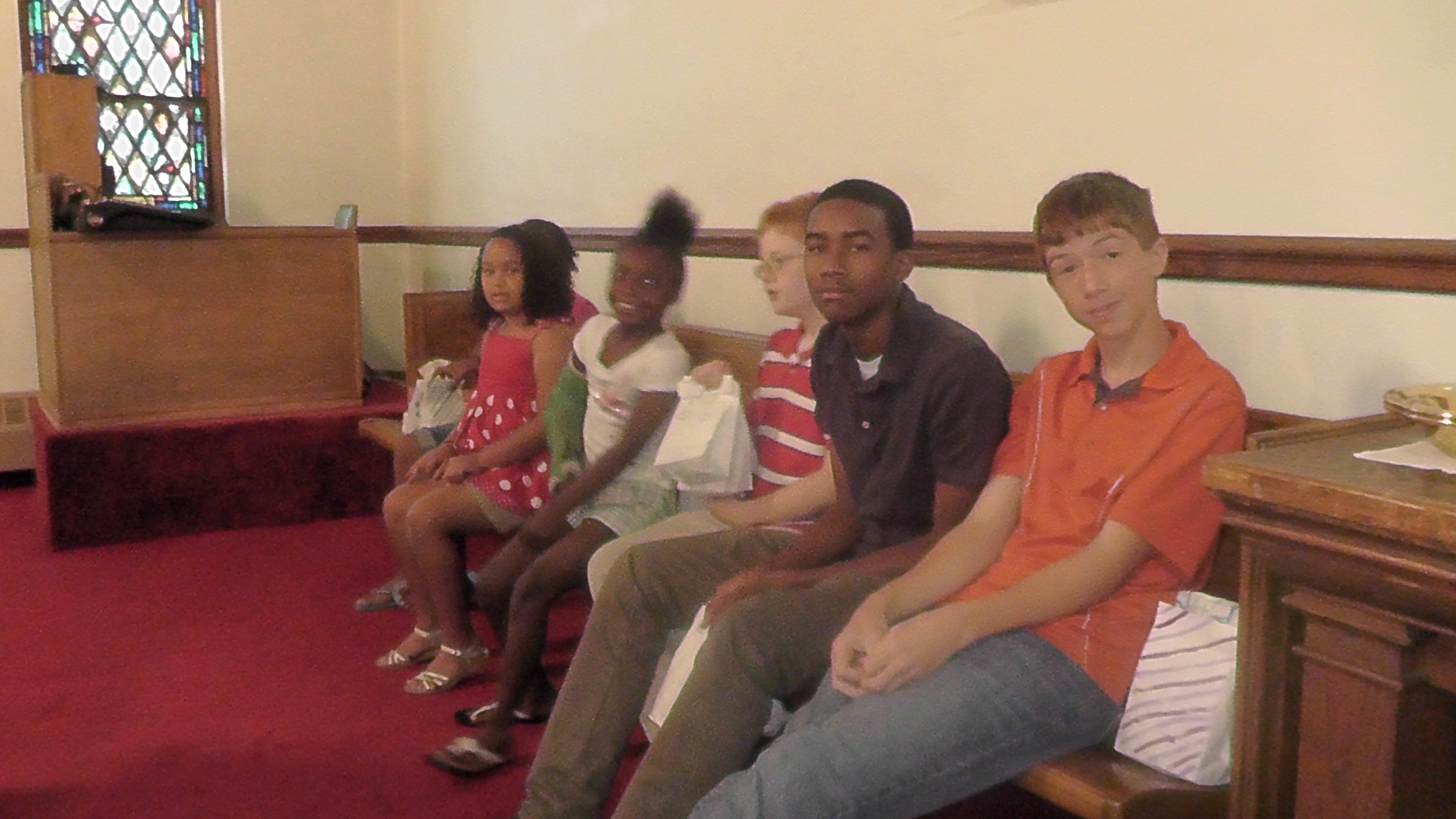
Children and youth wait before the service in preparation of honoring the congregation's fathers with decorated gift bags of muffins and hand made key chains.

Children and youth wait before the service in preparation of honoring the congregation’s fathers with decorated gift bags of muffins and hand made key chains.

WGBC’s children and youth honored the congregation’s fathers, male mentors, role models, and coaches at the beginning of the Father’s Day service with hand-decorated gift bags containing homemade muffins and hand made key chains.

The key chains reference Joshua 1:9: “Have I not commanded you? Be strong and courageous. Do not be afraid; do not be discouraged, for the Lord your God will be with you wherever you go.”

Wyndy McRoy made the muffins, and Barbara Jones stamped the key chains, which the youth class assembled.

Posted in Events | Leave a comment

Centennial Celebration Photos

Photos taken and shared by Selwyn Swe.

This slideshow requires JavaScript.

Posted in Events, Photos | Leave a comment

Centennial Celebration Sermon: There’s More to the Story: 1 Kings 3: 5-12

Preached by Terrell Carter on June 8, 2013- WGBC Centennial Celebration

By a show of hands, how many of you remember the radio personality Paul Harvey?  For those who are not familiar with him, Paul Harvey was a radio broadcaster and news commentator for the ABC family of radio networks.  His career spanned several years.  Over his career, he garnered a large and faithful following, and many awards and accolades for his style, wit, and professionalism.

One of Mr. Harvey’s most famous regular radio segments was titled “The Rest of The Story.”  “The Rest of the Story” was a Monday-through-Friday radio program which he began during the Second World War.  During these segments, Mr. Harvey would tell stories of what seemed like ordinary people, like you and me, who through, or after, overcoming certain events, became someone important in world history.

The story would begin simply and anonymously, but end with a surprise or twist.  Like the story of John Pemberton, who invented a cough syrup that didn’t taste good or sell very well.  Well, it didn’t sell very well until a pharmacist began to tweak the mixture of ingredients eventually combining the syrup with carbonated water, eventually the cough syrup into a concoction we now know as Coca Cola.

Or the story of a young boy named Guisseppie, whose father wanted him to be a fisherman, like everyone else in his family.  Because the little boy did not like fishing, his father considered him to be a lazy, good for nothing kid.  This boy was eventually estranged from his father and family because his “laziness” eventually led him to pursue a different occupation.  Baseball.  He was shunned and kept away from the family business, only to eventually become one of the greatest baseball players of all time.  This lazy boy was eventually called The Yankee Clipper, Joe DiMaggio.

Or the story of Harland.  A man who couldn’t keep a steady job for most of his life.  He tried his hand at almost every profession you could think of, and failed at them.  He was considered a failure by everyone, even his own wife, who left him multiple times, once taking their daughter and hiding her from him.  This unfortunate event led to his arrest when he tried to kidnap his daughter and take her back.  Life was never simple or fulfilling to him.  Between a lack of a steady job, and marital discord, life couldn’t get any worse for this man.  Well that was until he got his first social security check.  The day that it was delivered to his home, he realized that he had squandered most of his life, and had nothing to show for it.  So he took his $105 retirement check and began his own business.  The man was Harland Sanders, Colonel Sanders, and the restaurant was Kentucky Fried Chicken.

When telling the stories, Mr. Harvey would give an introduction that presented a tidbit or fact about the person in order to wet the listener’s appetite.  Often, it would be about how the person struggled for a portion of their lives and there seemed to be no hope for the future.  He would end the stories with his signature tag line, “And now, you know the rest of the story.”

In reading I Kings 3:5-12, I could imagine it being a part of one of Mr. Harvey’s broadcasts.  Mr. Harvey would start the program by saying, “Late one evening, a young child, who just became king, is lying in his bed resting.  Tucked away in his palace, he’s sound asleep.  While other children his age are dreaming of games and playground antics, this young ruler, Jedidiah, is dreaming about how to lead his country.

But, there’s more to the story.  This little boy is approached by God and offered all that his heart desires.  But instead of going for the gusto, this young man asks for the unimaginable.  He asks for wisdom.  Wisdom, not to be able to win at checkers and chess, or to be able to best his classmates, but wisdom to rule over an entire kingdom.  Who is this boy-king?  We know him as Solomon, the son of David, who eventually became known as the wisest man to ever live.  And now, you know the rest of the story.”

As you think through that fictional Paul Harvey monologue, what would have happened if you were Solomon?  Solomon is presented with a “get out of jail free” card and he doesn’t use it.  Instead, he’s the good dooby who asks for the right thing.

This young child, this boy-king, is approached by God in a dream, shortly after ascending his father’s throne.  He’s about to begin ruling a kingdom.  As he slumbers, God approaches him and offers him his heart’s desire.

How would you have responded to this question from God?  Would you have rattled off a laundry list of things you wanted from God?  A list of things you wanted/needed God to do for you?  “Well God, since you asked, I need you to take care of this and that…..and can you make sure to do this for this person and that for that person ….and this person has been mean to me, so can you get them….and you know I always wanted this……”

This boy essentially asks for the opposite of what most of us would have requested.  Instead of asking for things and possessions, he requests that God give him understanding and discernment so that he can govern God’s people correctly.

Would you have answered God’s question like that?  Would you have forgone wealth, power, prestige, love, respect, fear, etc. for the sake of being a good leader?

Let me be truthful, I struggle with this passage.  Not because of how Solomon answers God’s question, but because this passage is only a small snippet in the story of Solomon.  And if this were the only chapter that we had in Solomon’s life, then we would have a beautiful picture of a man of God.  But the truth is that this picture of Solomon is only a small piece to the overall puzzle of his life.  As Paul Harvey would say, “There’s more to the story.”

When most commentaries address this passage, or preachers preach from this text, they give a romanticized view of Solomon and the virtue he showed as a child king.  When presented with the opportunity to gain the desires of his heart, he instead opts for curtain #2, wisdom, a decision I would not relate to.  The beginning of his reign is off to a resounding, yet humble start.

It all sounds good, doesn’t it.  But in actuality, Solomon’s life and reign will be the antithesis of that.  It will be marked by a stark contrast between him making wise and foolish decisions.

Solomon’s reign begins in chapter 1 of I Kings.  There we find out that King David, his father, is old, and on the verge of dying.  David’s oldest living son, Adonijah, seeing that David is dying, privately proclaims himself king, and builds a secret coalition of leaders who will support him as he attempts to ascend the throne.  He does all of this without David’s knowledge or approval.

Nathan the prophet and Bathsheba, Solomon’s mother, hear about this coup and come up with a plan to get Solomon anointed as king by David.  And their plan works.  Solomon, who is actually a young man, possibly in his early to mid 20s with a wife, is publicly anointed king in front of everyone, and the people celebrate this.

How do you think these two brothers will get along at the next family reunion?  Adonijah eventually goes to Solomon, apologizes for his actions, and recognizes him as king.  But, Solomon keeps a close eye on him.  And there’s more to the story.

In chapter 2, David gives the new king Solomon instructions of what he should do to protect his legacy and the kingdom.  David gives him specific instructions on who he is to let live and who he should kill.  Sounds like the kinds of conversations we all have had with our fathers, doesn’t it?  David dies, and Solomon goes about cleaning house, as David instructed, even killing his own brother.

Let me pause and ask this question; how wise does Solomon seem so far?  His reign is off to an interesting start.  Do you think that this is the way God would have wanted Solomon to start?  He’s exacting revenge and making decisions based on political expediency, and what he believes is best for his reign and legacy.  But, could there be other ways that he could have handled things?  We will never know.  But, there’s more to the story.

Chapter 3 begins with words any Israelite probably never expected to hear, or read.  We are told that Solomon made an alliance with the King of Egypt by marrying the Pharaoh’s daughter.  The Pharaoh’s daughter.  The Pharaoh.  The ruler of the country that once enslaved Solomon’s people.  Solomon, who was likely already married, enters into a relationship with another woman that the Law of God likely frowned upon.

In Deuteronomy 17, God specifically tells the people that their kings should adhere to the following: “Only he must not acquire many horses for himself or cause the people to return to Egypt in order to acquire many horses, since the LORD has said to you, ‘You shall never return that way (to Egypt) again.’ And he shall not acquire many wives for himself, lest his heart neither turn away, nor shall he acquire for himself excessive silver and gold.”

Wow.  That three-fold prohibition seems pretty clear cut doesn’t it?  Don’t have anything to do with Egypt.  Don’t marry a lot of women.  And don’t acquire a lot of personal wealth.  But, is Solomon going to follow these commands?  It doesn’t seem like it.  Instead, it seems like he’s doing what he wants.  Or what he thinks is in the best interest of the kingdom.  And there’s still more to the story.

After Solomon marries the Pharaoh’s daughter, we find out that he regularly makes sacrifices at the high places throughout the land.  Vs. 2-3 say, “The people were sacrificing at the high places, however, because no house had yet been built for the name of the LORD.  Solomon loved the LORD, walking in the statutes of David his father, only he sacrificed and made offerings at the high places.”  So, Solomon loved God and followed his father in worshipping God.  This set of verses insinuates that the only problem that Solomon had was that he worshipped God at the high places.

High places were public places of worship.  Small outdoor temples and facilities that were erected where people could worship their gods/deities.  These places were not dedicated to YHWH, God the Father.  They were for any and every god.  But, since anyone could go to them and worship their gods there, and the temple had not yet been completed, followers of YHWH sometimes worshipped God there.  Sometimes right before, or right after, a pagan god was worshipped.

Does anyone see a problem with this?  The passage does say that the Temple had not yet been built, but people still needed/wanted a place to worship God.  So, why not use any old place that’s available?  The problem was that God had given specific instructions on how and where people were to worship.

In Deuteronomy 12, God says, “These are the rules that you shall be careful to do in the land that the LORD, the God of your fathers, has given you to possess, all the days that you live on the earth.  You shall surely destroy all the places where the nations whom you shall dispossess served their gods, on the high mountains and on the hills and under every green tree.  You shall tear down their altars and dash in pieces their pillars and burn their Asherim with fire.  You shall chop down the carved images of their gods and destroy their name out of that place.  You shall not worship the LORD your God in that way.”

Wow.  They did the opposite of what God wanted.  Not just them, but Solomon, as well.  Solomon’s decisions don’t seem to be that wise, so far.  But there’s more.

We get to the moment of truth.  The redeeming chapter in the novel that is Solomon’s life.  God approaches him in a vision and asks what He can give Solomon.  What does his heart desire, because he can have it?  With all of the power and authority of heaven and earth behind you, what do you want Solomon?

Solomon responds, “Lord, I am immature.  I haven’t been a leader for very long.  I don’t know how all of this being king business is supposed to work.  Make me into the man that my father wanted me to be.  Make me into someone that serves You, and the people, rightly.”

And God was pleased with this response.  But there’s even more.  God told Solomon that since he didn’t ask for wealth, or prestige, or anything else, God would give it to him anyway.  In addition to wisdom and discernment, God would give him all the things that would make him the envy of other leaders.  He would receive riches and fame.  He would be a wise, wealthy, and respected ruler.

And that’s exactly what happened.  Very soon after the dream, Solomon is presented with opportunity, after opportunity to show himself wise.  He makes judgments/decisions that bring him fame and accolades.  His reputation grew.  We are told that his wisdom surpassed all of the wisest men in the land.

But not only did his reputation grow, the kingdom also grew.  It grew in size and stature.  The kingdom encompassed more land and resources than King David could ever have dreamed of for his son.  Solomon even eventually built the Temple that David could only dream about.

Solomon’s stature grew.  The kingdom grew.  And so did Solomon’s family.  As part of his alliance building process, Solomon continued to marry the daughters and sisters of foreign leaders.  His house grew from one wife, to two, to eventually 700 wives, and 300 concubines.  Talk about political expediency.  And if you asked him, he probably would say, “I’m doing this for the good of the country.”  Yeah, right.

But there’s more to the story.  And it doesn’t end well.  When we read the final chapter of Solomon’s life, and all of the marriages, and all of the alliances, and all of the growth and prosperity, we find out that the people were heavily burdened by his lifestyle.  Discontent grew in the kingdom.  It took a lot of resources to keep the Solomon Bunny Ranch afloat.  Taxes were astronomical.  People were not happy.  His enemies grew in number and boldness.

And worst of all, Solomon’s life closes on this note: Solomon loved many foreign women.  He married them in spite of the fact that God said that His children should not mingle with foreigners, because they would cause them to turn their backs on Him.  And they caused him to turn his heart away from God.  And he worshipped other gods.  He was not faithful to God.  And God was angry with him.

And that, ladies and gentlemen, is the rest of the story.

As I said earlier, I struggle with the story of Solomon.  It’s a story of contrasts and contradictions.  Good decisions versus bad ones.  Having your heart in the right place at the right time versus having a sinful selfish heart.  Ruling wisely versus ruling foolishly.  Doing what’s best for others and country versus doing what’s best for me and my interests.  Honoring God versus honoring self.  Does any of this sound familiar to anyone?

I struggle with the story of Solomon because, truthfully, I see myself in his story.  If we could all be truthful, we can see a bit of ourselves in Solomon.  We can see opportunity offered, only to be under appreciated and squandered.  We can see frailty and weakness.  We can see greed and a desire to be upwardly mobile, sometimes even at the expense of others.  A desire to be the center of attention.  The big boss who is feared as well as adored.  Does any of this sound familiar to you?

His story started so well, but ended so tragically.  In some ways, he is a case study in what not to do.  How not to live out your relationship with God.

But, for all the negatives of Solomon’s life, the dichotomy of how he started versus how he ended, all of the failures, I still see a redeeming point in his narrative.  I see something that is redeeming and worthwhile.  The one consistent thing in Solomon’s story was God’s grace.  In spite of his outright sin and disregard for God’s desires, God still expanded the kingdom and protected His people.  God still expanded the territory.  God still expanded his legacy.

God stayed faithful to the promises that He made Solomon, and King David.  God did for Solomon what He promised, even when Solomon didn’t do what he promised to God.

I can see the same grace and patience that God showed to Solomon in my own life.

So, how are we to view Solomon and his life?  What I see, as I read the story of Solomon, is that, first, God is faithful to us, even when we are not faithful to Him.  God’s determination to love us and care for us is not based on anything other than the fact that God is love, and God has purposely chosen to love us.

Second, in spite of Solomon’s unwise and selfish decisions, God still used him to build and protect His kingdom.  God used the wisest fool to lead His people.  And eventually, this wise fool built the temple where God chose to dwell bodily with His people.

Before any of us judge Solomon, we should ask ourselves this question: How has your decision making been going lately?  Have all the paths you have chosen to take been down the straight and narrow?  Has everything you have done been for the right reasons, and blessed of God?  Have you ever fallen due to bad choices?  Have you ever just outright sinned?

If you have, there is good news.  Your story has not been fully written.  The final chapter has not been written in your life, in spite of what you may think, or others may think.  You still have pages to fill.  You still have kingdom building work to participate in.

The good news is this, “God works through some interesting characters.”  People like Abraham, David, Solomon, You, and Me.

God uses imperfect, selfish, goofy people to build and expand God’s kingdom.  To tell God’s story of faithfulness, of love, and redemption for the world.  God uses imperfect men and women in the work of God’s kingdom.

And that, ladies and gentlemen, is the rest of the story.

Hold on, Terrell.  Why in the world are you preaching this type of sermon as the 100th anniversary message?  Today is supposed to be about how long WGBC has been around.  Today is about recognizing all of the people who have been coming here faithfully for so long.  Today is about patting people on the back and telling them good job.  Today is about recognizing all of the visitors that are present today.

Don’t misunderstand me.  I agree with all of that.  But I would be remiss in my privilege to speak before you if I did not challenge you from God’s word, as well.  I agree that, like Solomon, at the time of his coronation as king, this is a time of celebration.  We can celebrate where God has brought us from.  100 years is an amazing thing.  But like Solomon, this is also a time to have a conversation with God about the future.

I imagine that at year 100, God is asking WGBC the same question that was asked of Solomon in year 1 of his reign.  That question is what do we want God to do for us?

At times like this, we may want to say, “God, we miss the glory days.  Bring back the glory days.  Bring back former members so things can be like they used to be.  We miss those people.  We miss spending time with them.”  I have to admit that is not a bad request.  Past relationships and past experiences are valuable.

But, is there a better way to respond?  We can tell God that we don’t want the glory days.  Instead, like Solomon, we can ask God to make us wise so that we would rightly do what God has called us to do.  God, give us the wisdom to envision new days and new friends in addition to our old friends.  God give us wisdom to enter into a new mission with the priority to build your kingdom and not our own.  Give us a heart to see your creation as you do.

We can ask God to make us faithful so that we will see another 100 years of serving the Webster Groves community and making a tangible difference in the lives of men, women, boys, and girls so that God’s kingdom will be built and God would receive the glory.

And that, WGBC, can be the rest of our story.

Will you pray with me?

Posted in Sermons | Leave a comment

WGBC Music

This gallery contains 11 photos.

More Galleries | Leave a comment