It Ain’t Over Till It’s Over: John 20:1-10

Preached by Terrell Carter on 3/31/13

One of the strongest, and most painful, memories that I have is the day of my mother’s funeral.  Derrell, my twin brother, and I were 7 years old when our mother was murdered.  It wasn’t our first funeral.  Just a year prior, our grandmother, Grandma Ferguson, our mother’s mother, had died of cancer.  Grandma Ferguson was in her 40s when she died.  She was married to Granddaddy Ferguson, and they had 6 children, and a whole slew of grandchildren.  Prior to her death, Grandma Ferguson lived a vibrant/active life.

She would pick up her 4 grandsons every morning and take us to her house to babysit us while our mothers went to work.  She played with us, encouraged us, and in general spoiled us all.  We had good times and good memories of Grandma.  As we stood next to Grandma’s casket, we wanted her to get up from her nap, just like she did every afternoon, and keep playing with us.  But, our uncle Michael had to explain to us that Grandma wasn’t sleeping.  She wasn’t going to be able to get up.  And worst of all, after that day, we would not be able to see her again.  After that day, all we would have would be pictures and memories.

Grandma’s funeral was the first time that I experienced the death of a person.  That day, and for weeks afterwards, I was flooded with feelings and emotions that I could not control.  I cried.  We all cried.  We all got angry.  We were all sad.  Eventually, the pain became less intense, and the crying was less often.

But now, a year later, there we were, going to see another body in another casket.   This time it was our mother’s.

As Derrell and I walked into the sanctuary of the New Sunny Mount MBC, everything seemed so big and so far away.  The lights were dimmed, making the sanctuary feel hollow and dark.  It seemed like it took forever for us to be able to walk from the sanctuary doors to our mother’s coffin.  Grandma and Papa (Genevieve and Jerry), our father’s parents, who were now going to raise us, stood in the church hallway, looking through the glass in the sanctuary doors.  They were ready to respond if we needed them.

As Derrell and I walked, we felt the same feelings from a year before.  We were in despair, confusion, anger, frustration, and loss.  We asked God the same questions from the prior year.  Why?  How come it couldn’t have been someone else who died?  Why did You take her away from us?  Why did You leave us?  If you loved her, why did You let this happen to her?  If you loved us, why did You let this happen to us?  What’s going to happen to us next?

As we stood next to her casket, our lives, our dreams, our hopes, our security, and our expectations had been shattered.  We looked at our mother, who no longer looked like our mother.  There was no more light in her eyes.  There was no more pretty smile.  The arms that had previously held us and played with us were stiff and lifeless.

I know this kind of experience is not unique to me and my brother.  If asked, all of us could tell of an experience of how we lost a loved one who was too young to die.  We all can think of a father or mother whom we miss.  We all can think of a spouse who was taken from us too soon.  We can think of a friend who was taken from us by tragic, unforeseen circumstances.

If asked, we all probably could acknowledge the questions we sometimes ask God when these types of things happen.  Why her?  Why him?  Why me?  Why not someone else?  God, if you are so great, why would you let this happen?

We all could acknowledge the emotions that we feel towards God during these times.  Fear.  Anger.  Confusion.  Disbelief.  Numbness.  And sometimes, even a loss of faith.

As we look at the circumstances surrounding that first Easter morning that occurred so long ago in John 20:1-10, we can recognize and sympathize with what the followers of Jesus were probably feeling.  Their world, which seemed so bright and promising and full of hope just days and weeks and months before, had recently been thrown on its head.

For months and weeks before the events in John 20, the people that we read about had been living an exciting life.  They had been part of the inner circle of the hottest religious leader/preacher in town.  They had been following Jesus, a man who had come from humble beginnings.  He came from a small town where His claim to fame was that He was a carpenter’s son.

Just three years prior, He exploded onto the scene and began to carve out a niche for Himself as a teacher of great spiritual truths and a lover of the unlovable.  His teaching attracted and empowered those who were disenfranchised and outcast.  This was reflected in the people that made up His core group of followers.  He surrounded Himself with stinky fishermen, like Peter, who could be obnoxious, boisterous, hot headed, and impulsive.  Tax Collectors, like Matthew, who were not accepted by their own people because they had the reputation of being swindlers and crooks who cheated the common person just to make a quick buck.  Women with questionable reputations like Mary Magdalene, who had seven demons cast out of her.  He was affiliated with people that were sick and gross looking, and unclean, and deaf/dumb/blind.

He surrounded Himself with those who the religious elite considered less than desirable.  But Christ loved them.  Not only did He love them, He fed them and He healed them.  He performed miracles on their behalf.  He taught them and showed them that God loved them and had a home for them in His kingdom.  Christ readily made friends with the friendless.  You could say that He was the Robin Hood of Israel.

As good as His relationships were with the outcast, they were essentially nonexistent with the religious elite.  As a matter of fact, you could say that He was at odds with many of the religious leaders of His day.  He was an outcast within the temple community.  Not only because of the company that He kept, but because of what He taught.

He taught that people could have a personal relationship with God the Father without having to go through the temple or the religious elite.  “How was this possible?” they asked.  He told them that He was the Son of God.  The one that could restore their broken relationships with each other, and God.  Where sacrifices and prayers failed, His position as the Son of God, one who was equal in power, stature, and authority with God the Father, could fix everything for them.  All they had to do was believe the evidence that He had given them and trust in Him.

In many ways, Christ was a celebrity.  Wherever He went, people followed.  Whenever He spoke, people listened.  People lined up for Him to bless them, or their children, with a miracle.  His popularity was at an all time high.  You could say that He was on top of the world.  And His followers, including those we meet in John 20, were riding high right along with Him.  If they were asked, they would have said that life couldn’t get any better.

But the good times would not last for long.  After entering Jerusalem earlier that week, Christ enraged and alienated the temple leaders.  He disrupted the system they had in place to bring in money to the temple by turning over the money changers table.  He embarrassed the temple leaders by confounding them with His wisdom and spiritual maturity.  He made them look bad in front of the common people that looked up to them for spiritual guidance and direction.  They could not let something like this happen.

The temple leadership concocted a scheme to have Jesus arrested and tried on trumped up charges.  While Jesus was in a garden praying with His followers, a posse surrounded them.  After a bloody hullabaloo where Peter cuts off someone’s ear, they eventually take Him into custody.

The joy and exuberance that Christ’s followers had been feeling quickly turned to fear and tense anticipation.  So much so that the majority of them abandoned Christ during His greatest hour of need.

At His trial before the religious leaders, only the disciple John could be found.  And even that was only as a silent witness to the events that were to occur.  Even Peter, the man who had been at the forefront of recognizing and proclaiming Christ’s power and authority, falls silent in his support of Christ.  No longer does Peter boldly proclaim Christ as the Son of God.  Instead, he denies even knowing Christ in a casual way.

The emotions of Christ’s followers had gone from joy and awe to fear and trepidation.  They had experienced the highest highs, and now were sinking into the lowest lows.  And unfortunately, they’re going to go even lower, because after Christ is falsely accused on trumped up charges, after His despicable trial in the kangaroo court of the temple, after He is beaten and shuffled before one false witness after another, Christ is then subjected to one of the cruelest and most humiliating punishments possible at that time.  He was crucified between two common criminals.  It seems as if He is unable, or unwilling, to save Himself.

His former followers finally come out of hiding to see His beaten and bruised body hanging from the tree.  They are horrified by what they see.  He no longer looks like the man they once knew.  He no longer smiles.  His eyes are no longer bright.  His arms and hands are no longer strong.

When they thought things couldn’t get worse, they did.  In order to speed up the dying process, the guards broke the legs of the two men hanging on the sides of Jesus.  But, instead of breaking His legs, they pierce His side with a spear.  When they realize He is dead, they hurriedly took His body from the cross.

Instead of turning His body over to His family, two of His followers petitioned to have it turned over to them.  Nicodemus, the man who came to Jesus secretly at night to ask what he needed to do to be saved, and Joseph of Arimathea, who we really don’t know much about.  We do know this; both of them actually belonged to the religious council that brought the trumped up charges against Jesus.

I can only imagine the emotions that these two felt.  They were part of the religious elite.  Part of the upper crust.  And yet, they believed the message of Jesus.  Their hearts probably broke as they watched Him stand before false witnesses and an unsympathetic jury.  Yet, they could do nothing to help Him without putting their own lives in danger.

The religious elite wanted Jesus to be buried quickly so as not to be an embarrassment during the Passover Celebration.  So, these two men stepped forward to take charge of the body of Christ.  They obtained the body and hurriedly got it prepared to be placed in a new tomb that belonged to Joseph.

As the Passover approached, the true Passover Lamb laid in a tomb.  No fanfare.  No celebration.  He laid in nothing but darkness.  A once dazzling leader lay lifeless.

Days pass and the buzz surrounding the trial and execution of Christ may have begun to fade from the memories of many people.  But not for Mary Magdalene.  The woman who Jesus had cast multiple demons out of.

The scriptures say that on the first day of the week, she got up early to go to Jesus’ tomb.  She went to finish the burial process that had been begun in haste when Christ was removed from the cross.  She wanted to give Christ a proper burial preparation.  When she arrives at His tomb, she is shocked to see the tremendous stone that had been set to cover the entrance had been removed.  And not only was the stone moved, but Christ’s body was missing.

Imagine her feelings as she walked up and saw this.  She was already in tears, and was probably inconsolable.  And now, someone has performed the ultimate act of disrespect.  She was flooded with feelings of terror and despair.

All she could do was run to tell someone.  But who can she tell?  Who can she trust?  Who will help her get to the bottom of things?  She runs to Peter, the disciple who had been missing in action, and John, and tells them what she has found.  They all run back, at a fever pitch, to the grave to find things just as she said they were.  The tomb is empty.  The grave clothes were still there, but the body wasn’t.

All hope is lost.  Their dreams were lost.  I can imagine that they began to ask God the same questions that my brother and I asked at our grandmother and mother’s funerals.  I can imagine that they felt the same emotions that Derrell and I felt.  The same emotions that all of you have probably felt at some time in your lives.

Verses 9-10 tell us that they did not understand that Christ had risen, as the scriptures had predicted.  Instead, with their heads down, and confusion surrounding them, they leave and go back home, hopefully to not experience any more bumps on their emotional rollercoaster.

Everyone left, except for Mary.  She remained behind.  Crying.  And crying.  And crying.  But her tears eventually were interrupted by a familiar voice.  A familiar look.  A familiar touch.  Jesus was at the tomb, physically in her presence.  His body had not been stolen, or misplaced, or destroyed.  He had arisen just like He had promised He would.  Her tears of sorrow turned to tears of joy, jubilation, excitement.  So much so that Jesus had to eventually tell her that she couldn’t hold on to Him.  She was no longer sad, but jubilant.

Not only did Mary’s disposition change, but everyone’s disposition changed.  Christ appeared to numerous people and groups to prove to them that He was the risen Son of God.

For days, Christ’s followers were in emotional turmoil because He was executed and buried.  What they saw in His death was the end of the road.  They saw life as they knew it end.  The man that had embodied the coming of God’s kingdom on earth was gone.  And with Him went their hopes and dreams.

But on that first Easter morning, they went from the depths of an emotional valley to the peak of the mountain top.  Christ came back.  Christ was raised from the dead.  And because of Christ’s resurrection, they no longer had to ride an emotional rollercoaster.

Okay, Terrell.  What’s the point?  How does this relate to where I am in life?  We, like the ancient followers of Christ, will find ourselves in the valleys of life.  Sometimes it may seem like all we experience is emotional turmoil.  Where there used to be good health, there is a report from the doctor that will bring us to tears.  The doors that we expected to open get slammed in our faces without hesitation.  Where we expected to hear yes, we only hear a forceful and resounding “no”.

But, because of Christ’s resurrection, we can look past the closed doors.  Because of Christ’s resurrection, we can see past the valleys of life.  Because of Christ’s resurrection, we can ignore the answers of no.  Because of Christ’s resurrection, we can be still, and wait, and trust the risen Savior and hear Him ask us “Why do you weep?  I have risen with all power in my hand.  And I am here with you.  I am smiling on you.  I am interceding on your behalf.  I am here because I love you!”

Because of Christ’s resurrection, we no longer have to be on an emotional rollercoaster.  Because of the resurrection, we no longer have to be victims to what the world and Satan throw at us.  Because of the resurrection, we can handle anything that life sends our way.  Because of the resurrection, we have hope for this life and the life to come because Christ was willing to live, die, and rise again, on our behalf.

Craig Barnes puts it this way.  “Earlier this week, an old couple received a phone call from their son who lives far away. The son said he was sorry, but he wouldn’t be able to come for a visit over the holidays after all. “The grandkids say hello.” They assured him that they understood, but when they hung up the phone they didn’t dare look at each other.

Earlier this week, a woman was called into her supervisor’s office to hear that times are hard for the company and they had to let her go. “So sorry” the supervisor says.  She cleaned out her desk, packed away her hopes for getting ahead, and wondered what she would tell her kids.

Earlier this week, someone received terrible news from a physician.

Earlier this week, someone else heard the words, “I don’t love you anymore.”

Earlier this week, a child was told that they would not see a parent again.

Earlier this week, someone’s hope was crucified.  And the darkness is overwhelming.

No one is ever ready to encounter Easter until he or she has spent time in the dark place where hope cannot be seen. Easter is the last thing we are expecting.  And that is why it terrifies us.  This day is not about bunnies, springtime and girls in cute new dresses.  It’s about more hope than we can handle.”  The hope that comes from a risen Savior.

In spite of emotional, financial, and physical turmoil, we have more hope than we can handle because we have a Savior that got up out of the grave that first Easter morning.

Terrell, this is not a happy message.  This is Easter.  We were expecting a happy sermon about sunrises and celebration and hosannas to the king.  Well, I have to tell you that I think that this is a sermon of celebration.  We have every reason to celebrate.  We can celebrate in the midst of life’s drama because within the resurrection our lives don’t have to be dramatic.  We can celebrate in the midst of life’s uncertainty because within the resurrection we can be assured that Jesus has certainly taken the burden of our sins and the weight of the world from us.  We can celebrate in the midst of life’s insecurity because within the resurrection we can have confidence that we are securely within the hands of our mighty God and Savior.

This celebration of God’s love, mercy, and protection is at the heart of the Easter story.

Will you pray with me?
 

Posted in Sermons | Leave a comment

You’re Not the Boss of Me: Mark 11:27-33

Preached by Terrell Carter on 3/24/13

Intro: One day, a bus driver was driving along his usual route.  He didn’t encounter any problems for the first few stops.  A few people got on, a few got off, and things generally went well.  At one stop, however, a big hulk of a man got on. He was all of 6’ 8″ tall, built like a wrestler, and his arms seemed to hang down to the ground.  He glared at the driver and told him, “Big John doesn’t pay!”  Then he sat down at the back of the bus.  The driver was a small man, all of 5’ 3″ tall, thin, and very meek, so he didn’t argue with Big John.  But he wasn’t happy about what had just happened.

The next day, the same thing happened.  Big John got on again, made a big show, refused to pay, and sat down.  It happened the next day, and again the day after that.  The bus driver began to lose sleep over the way Big John was taking advantage of him.

Finally, the driver could stand it no longer.  He decided he had to do something about Big John.  He signed up for body building classes so he could get bigger and stronger.  He took a class on finding his self-esteem and a class on how to be assertive. By the end of the summer, the bus driver had become quite strong, assertive, and he felt very good about himself.

The next Monday, Big John entered the bus and again declared, “Big John doesn’t pay!” Enraged, the driver stood up, glared back at Big John, and bellowed, “And why not?!”   With a surprised look on his face, Big John replied, “Big John has a bus pass.”

How well do you respond when you find yourself in the middle of what you consider to be a power struggle?  How well do you respond when you think your authority is being challenged?  To some of us, this question may seem odd because you do not consider yourself to be an authoritative person.  You don’t have any type of power.  You don’t hold any important position in society or within a social group.  Actually, you may be thinking that your life experience is that other people hold authority over you.

The story is told of a ship sailing during war time on a dark night.  Off in the distance, the Captain saw a light and it became obvious that the oncoming vessel was on a collision course with his vessel.  He commanded his signaler to flash a message: “Alter your course 10 degrees south.”  The reply came back from the ship coming towards him: “Alter your course 10 degrees north.”  The captain then signaled “Alter your course 10 degrees south. I am a Commander.”  The reply came back “Alter your course 10 degrees north. I am a seaman third-class.”  By this time the ship’s captain was getting furious.  So he signaled: “Alter your course 10 degrees south.  I command a battleship.”  The reply came back almost instantly: “Alter your course 10 degrees north.  I am standing in a lighthouse.”

In some aspect, we all hold some type of power in our lives.  We all have authority over someone or some group in our lives.  At work, you may not have a fancy title, and you may be on the bottom rung of the organizational ladder, but you still may control the keys to the kingdom of the office.  If anyone wants to get any real work done, they have to go through you.  You control credit cards, passwords, phone numbers, and the most important piece of equipment in any office environment; The thermostat.

Even children wield a certain amount of power.  If you are the oldest sibling, you hold what seems like the ultimate authority; the power to make your younger sibling do exactly what you want them to.  From cleaning your room, keeping secrets, and sharing their lunch, big brothers/sisters have power over the younger ones.  But, even the youngest child has a secret weapon that gives them power.  It’s the ability to snitch.  “I’m telling” is a phrase that has brought many big brothers to their knees in tears.

We all, no matter our lot in life, get to boss around someone.  Whether it’s our little brothers and sisters, our children, our coworkers, or just the cashier at McDonalds.

But, with that power comes power struggles.  We all have had arguments that ended with “it’s my way or the highway.”  They happen with complete strangers who won’t let us park where we want.  They happen with our coworkers about where we will sit during a particular meeting, or what color we want presentation folders to be.  They happen at school while we’re trying to pick whose going to be shirts and whose going to be skins in basketball.  They happen with our child who has learned the meaning of the word “NO!” and uses it every time you try to get him or her to eat something good for them.  It happens with friends and family members.  These power struggles usually occur over things that, in hindsight, are insignificant.

But sometimes, every now and then, our power struggles are over important things.

Today’s passage from Mark 11:27-33 tells us about one of those times of significance.  It tells us about the second day of the last week of Christ’s life, and a power struggle that was occurring between Christ and the temple personnel.

At this point in time, Christ had already made the triumphant entry into the city.  People laid down palm leaves and proclaimed Him as a man of God.

Before we get too far into the story, let’s get a bead on the players in the story.  The story takes place in the temple, the place where sacrifices were made and God’s word from the Old Testament was expounded.  In the temple you had temple leaders, which included The Sanhedrin, chief priests, and scribes.  These were the religious and political leaders of Israel.

At the temple, you also have the moneychangers.  These were merchants who made change for people in order to buy sacrifices to be offered as part of their religious service.  These moneychangers charged ridiculous prices to make change.  There are also people that come to the temple to make sacrifice, but they end up watching this interaction occur between Christ and temple personnel.

We round out our cast with Christ, who during this last week of His life is in for a roller coaster ride of action.  It seems like no matter where He has gone, drama was bound to follow Him.  And the last person is John the Baptist, who had already been beheaded.  These are all people who we have read or heard about before.

What happened to spark this confrontation between Christ and the temple personnel?  On the first day of Christ’s last week, He triumphantly enters the city to a chorus of praise and worship from the common person, He goes to the temple and proceeds to turn over the tables of the moneychangers.  He didn’t waste much time before He disrupted the daily routine of not just the moneychangers, but that of the chief priests, scribes, and elders.  He confronted them about their misuse of the temple and the misuse of the people that came to make sacrifices.  He effectively stopped the moneychangers from conducting business as usual at the temple.

Christ, the upstart itinerant preacher with a ragtag team of disciples, the rebel without a legitimate cause, the political novice, the unpedigreed carpenter, the country bumpkin.  He had the nerve to lay the smack down on the established temple life.  He was positioning Himself as a hero to the people, but an enemy to the religious and political elite.  An enemy to those who were in power.  There was no way that the temple personnel would let Him flex His muscle like that without experiencing some type of repercussion.

The easiest way to handle the embarrassment that Christ had heaped on them was to turn the tables on Him in front of the people that were impressed by His actions.  They would do this by making Him look small and unimportant in front of the community.  They would put Him on front-street by asking Him a simple, yet loaded question.  “By what authority do you come in here and do the things that you do?”  “What right do you have to come in here to wreck havoc on us?”  “What right do you have to come in and cause confusion?”  And from the Terrell Carter translation of the Bible, “Who died and made you the boss of us?”

How dare you come in here and violate what we have established?  How dare you embarrass us?  How dare you stop the flow of money?  How dare you challenge our power and authority?  How dare you embarrass us in front of all these people?

In the midst of their discussion, I think that it’s interesting that they never questioned Christ’s theology.  Their issue with Christ was not His spiritual authority or His theological stance on Hebrew scripture.  Their problem was with the audacity that He exhibited by bucking the religious, sacrificial, and financial system that they had in place.

You see, the chief priests, scribes and elders were all the beneficiaries of a prosperous system within the temple.  The chief priests, scribes, and elders were at the top of the social and political food chain.  And if you throw into the mix the fact that Herod the Governor began to hand pick and appoint priests to serve in the temple, you can tell that political and monetary privileges and favor were at stake in all of this.

“Who died and made you the boss?”  Christ doesn’t give them an answer.  Instead, He responds with His own question.  “I’ll play your game if you play mine.”  Christ asks them what seems like an unrelated question.  “By what authority did John the Baptist do what he did?  Did his authority come from God, or did it come from man?”

In the eyes of the temple leaders, John the baptizer was no better than Christ.  John was just another itinerant preacher with bad taste in food and clothing.  John’s preaching was a thorn in the side of the priests because he taught that people did not need to go to the temple and pay a fee to have their sins forgiven.  Instead, John taught that forgiveness was based on repentance alone.  But the priests couldn’t speak out against John publicly.

They couldn’t publicly deny or confirm John’s authority.  That would be public and social suicide.  If they said that John did what he did based on a divine assignment from God, then Christ would counter with “Why didn’t you all believe him?” which would make them look bad before the people.  If they said that John was simply a man who did what he wanted to do, the people hearing the debate would be in an uproar because John held street credibility with them.

But, I think there is another underlying issue, as well.  John understood that he was simply God’s messenger.  He knew that his job was to proclaim the coming of Messiah.  To pave the way for the Savior.  And who did John say was Messiah?  Who did John say was the Savior in the flesh?  Jesus.  John believed this so much that he willingly conceded his power/influence/authority among the people to Christ.

If the temple leaders acknowledged anything positive about John or his authority, they would by default be acknowledging John’s testimony about Christ.

In order to save face, they refused to continue playing the game that they had started.  “We don’t know where John got his authority.”  Christ’s response to them was, “If you don’t know, I won’t tell you who gave me my authority.”  Terrell Carter’s translation: Mind your business.

One thing is clear.  This debate was about one thing.  Who was going to be in charge?  Who would be the big dog within the temple?  Within the religious community of Israel?  Within the political strata of Jerusalem?  Would they continue to run the temple and keep things at the status quo?  Or, would they recognize the fulfillment of Old Testament prophecy as He stood before their eyes?  Christ knew the answer to that question before they even said anything.  No!!!  They would not back down.

In response to their defiant attitudes, Christ tells them a parable, which we find in Mark 12:1-12.  In the parable, Christ relates the story of a landowner who owned a vineyard.  He took great care to put everything in that vineyard that would make it possible to grow the best fruit for harvesting.  Instead of tending the land himself, he rented it out and hired a group of people to work the land for him while he left the country.

When harvest time came around, he sent an employee back to the vineyard to harvest some of the fruit that had been grown.  Instead of honoring the land owner’s request sent by his representative, the hired help beat up the representative and ran him out of town.  The owner sent another person to harvest the fruit, and the same thing happened to him.  More servants were sent, and they were either beaten or killed.  Those who were renting the land were determined not to give up anything.  Finally, the landowner sent his own son to harvest his portion of the land.  Unfortunately, the son never returned to the father.  He was killed by the group.

Christ asked a question after He told them parable.  “What do you think happened next?”  The priests agreed that the landowner would have those people killed for their dastardly deeds and then bring someone else in to finish working the land.  Christ said, “Right.  And you have also read the scripture that says that the stone that the builders threw away is now the most important stone in the whole building.”

This parable was clearly directed at them, and they knew it.  Christ was comparing them to former generations that rejected God’s prophets.  Prophets like Isaiah, Jeremiah, and even John the Baptist.  They rejected/ignored them, and had them persecuted and killed.  God sent His prophets to feed and cultivate His children, but instead, they were disposed of by the likes of false leaders and teachers, like the Pharisees and Sadducees.  They also understood that Christ was comparing Himself to the son in the parable.  He was equating Himself as the true representative of God the Father.

The question that they had to answer after this debate was would they acknowledge Christ’s authority.  No!!!  Instead, they wanted to have Him arrested and persecuted, but they were afraid of what the people would think and do.

After reading this passage, I have to ask myself the question, Do I see myself in any of this?  Can you see yourself in any of this?  Can we see ourselves in any of this?  Unfortunately, I think the answer is yes.

I can recognize the attitudes of the temple personnel as my own.  They had gotten comfortable in their lives as leaders in the temple.  They had a certain system set up and it worked in their favor.  They were the rock stars of Jerusalem.  They were the “it” crowd.  Their positions as priests and leaders were originally appointments from God.  Somehow they became political appointments.  Instead of seeing their service in the temple as a faithful duty performed to God, they saw it as part of a wheel that needed continual greasing in order to keep their lifestyles going.

They lost sight of the big picture, of what God was doing in history.  They lost sight of what God was doing in the world.  They lost sight of what God promised to do in and among God’s people.  What God was doing for all mankind.  Instead, they fought to keep their piece of the pie intact.  In doing so, they rejected the true purpose behind the temple.  And, they rejected the true fulfillment of the sacrificial system that they worked so hard to protect.  They rejected Christ.  They refused to recognize Christ’s position of authority and their own lack of authority.  They saw themselves as being in charge and they would not give that up.

Do you find that happening in your life?  Your focus is on what you want and what you have achieved in life.  You have worked hard to get where you are.  You’ve sacrificed and played the game to achieve your position in life, and now you are somebody.  And no one will change that.  You are a part of God’s family, but you’re happy being on the fringes.

What do I mean by that statement?  You’ve put your trust in God for the salvation of your soul, but that’s about the only thing you feel comfortable turning over to Him.  You still control everything else.  God wants you to turn it all over to Him.  To let Him be the boss.

Let’s look at it in an even more different light.  Who is in control here at WGBC?  Maybe you have carved out a niche for ourselves here at WGBC.  Maybe you have positioned yourselves in places within the church where we are comfortable and respected, and we even wield a certain amount of influence.  The question that we have to answer is what are we doing with it?  If the chief priests were asked the same question, they would have answered that they believed that they were doing God’s will.  Is your service here at WGBC just another feather in your cap?  Is it a way for you to assert your authority over others?  Is it a way for us to simply receive recognition from others?  Or do we recognize it as a divine assignment from God?

The church is not here for our personal motives.  It exists to recognize the fulfillment of God’s plan for mankind in the person of Jesus the Christ.  The church is here to invite the people in the court of the gentiles.  The church is here to invite strangers, foreigners, outsiders, people in the street, and the people in the community, to come to experience the presence of God, the love of the body, and partake in the benefits of the sacrifice that was made on their behalf.

My prayer for all of us is this: that when we are presented with the idea that God wants to exert an active influence over our lives, that we would not resist, but concede, and see the power of God work mighty things on our behalf.  As individuals and as a church.

Well, Terrell, this is not a typical Palm Sunday sermon.  You didn’t spend any time telling us about how Christ entered the city triumphantly.  You didn’t talk about the people laying down the palm leaves before Him as He rode the donkey in.  You didn’t talk about how the people in the crowd celebrated this great teacher who was visiting them.

I think all of that is an important part of the Easter story.  But I also think that it’s important to see what happened after the palms were laid down.  I think it’s important to see what happened after the cheering stopped.  I think it’s important to see what happened after the crowd dispersed.  I think that it’s important to see what happened after Christ entered into the city and got to work doing the work of God’s kingdom.

What did Christ do to show the works of the kingdom of God?  Christ confronted evil.  Christ confronted sin.  He loved those who society said didn’t deserve love.  He loved the outcast.  He protected those who couldn’t protect themselves.  He cleared the way for people to have their relationships with God restored and strengthened.

I think that story is just as important as the story of Christ entering the city.

Will you pray with me?

Posted in Sermons | Leave a comment

Mission Committee

CommunityMission Committee reports that WGBC exceeded its goal of $1,000 for the J. Hudson Taylor Mission Offering by collecting $1,379.26.  Also the Mission Committee sent $200-300 to CBF of Missouri for use with Sandy Rescue in New York.

The Mission Meal and More will be Wednesday, March 20, at 5:30 p.m.

The committee also reports that half of May’s Mission Offering will go to the East St. Louis Christian Activites Center, which is associated with Chaplain Drew Phillips.

$840 was sent to Augisteen Komarapu for his Grace Gospel Ministry in India, who wrote to share that the ministry there has had a one-day gospel meeting on Feb. 28.   Five pastors were invited pt participate and share God’s word.

The Committee of Grace Gospel Ministry has distributed new clothes (saries) to 25 women.  “All 25 women shared their gratitude to God and sponsor i.e. you the church for the gifts that was distributed to them.”  Rev. Komarapu said he would send some pitctures of the meeting and a program of the day.

Rev. Komarapu’s ministry has also bought a mobile sound system which costs about $180 for our ministry (GGM, India) to help with out-reach in evangelism for street preaching. Rev. Komarapu said, “At this time I want to express my humble gratitude and thanks to you all the members of the Church, pastor and mission committee for your prayers and the support that make us to works more for the glory and honor of God.  Your love and concern for us and our ministry is always appreciated. Please convey our greetings to all the members of the Church.”

Posted in Missions | Leave a comment

Winter Banquet Fun

This gallery contains 43 photos.

More Galleries | Leave a comment

Easter Activities

28mr10-062.jpgPalm Sunday, March24,     Holy Week begins with the celebratory entry of Jesus into Jerusalem.  The people tore branches from the trees and strew the pathway with their garments.  We begin our palm Sunday service with the procession of the palms.  We welcome Jesus.

Maundy Thursday Communion, 6:30 p.m., March 28,     During Holy Week, we pause with the Christ, to consider the mandate of love and service to others.  Just as the Lord God loves us, we are called to do likewise.  Greater love has no one than this – to give one’s life for others.  Russell Cawthon will lead the service.

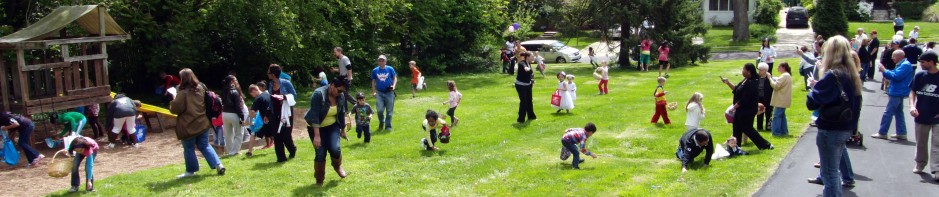
Egg Roll, Saturday, March 30,     Children have a great time on the Saturday afternoon before Easter with the Egg Hunt on the grass at WGBC.  It you can’t find an egg, then wow!  Hundreds of eggs are placed in a small lawn area.  You are guaranteed a lot of eggs filled with treats.  The fun begins at 1 p.m.: games and refreshments inside and lots of eggs to find outside.

Easter, March 31,     Our God reigns!  The Christ is alive!  God is victorious over death and sin.  Join the church family on Easter morning as we celebrate the victory that is ours in Christ Jesus.

Posted in Events, News | Leave a comment